
How to Verify a Dust Collector Supplier's Delivery Capability: A Practical Audit Checklist
Delivery capability is the part of a dust collector quotation that is hardest to check and most expensive to get wrong. A supplier can quote a pulse bag filter in a day and still miss the site date by a month, not because the steel was late but because the capacity, the test record, the drawing approval or the electrical documentation was never verified. This checklist turns a promise such as 15–45 days into seven checkable stations, and states the evidence each station requires.
Short answer: verify a dust collector supplier's delivery capability with three document sets. First, capacity evidence — facility footprint, monthly set capacity, annual output, current backlog and the share of capacity your order consumes. Second, quality evidence — whether every unit is tested or only samples, plus the test record format and model-level performance data. Third, a written lead-time schedule that names which configuration falls inside which delivery window, with drawing approval, fabrication, testing, packing and document release dates separated. Verbal assurances and quick-ship badges prove nothing about an engineered order.
What Delivery Capability Actually Means in a Dust Collector Project
A dust collector is, in regulatory language, a device or combination of devices for separating dust from the air handled by an exhaust ventilation system — the definition used in the US ventilation standard 29 CFR 1910.94(a)(1)(vii). For procurement purposes, delivery capability is the ability to hand over a unit that meets that specification, on the agreed date, with documentation that lets the plant commission it without a second round of approvals.
In practice the capability is stacked from four layers: engineering (returning drawings and data for approval), fabrication (a production slot that matches your order), component supply (filter bags or cartridges, pulse valves, fans, control panels), and documentation plus service (test records, electrical conformity, packing list, commissioning support). Delays are rarely created by the shipping leg. They are created by an unapproved drawing, a filter media lead time nobody checked, or a test record that does not exist when the inspector asks for it.
That is why the audit belongs at quotation stage, while the specification can still be changed without re-engineering the project.
Why Delivery Capability Is a 2026 Procurement Question
Two structural facts make supplier delivery capability worth auditing now rather than assuming. Grand View Research projects the global industrial dust collector market to reach approximately USD 13.42 billion by 2034, and baghouse collectors accounted for approximately 25.8% of global market revenue in 2025. Fabric filtration at that scale means demand competes for the same filter media, bags and cartridges that every engineered order depends on.
At the same time, two different fulfilment models are quoted side by side. SENOTAY publishes a lead time of 15–45 days for its orders, while ACT Dust Collectors states that it holds 5 of the most common sizes in stock and ships them within 5 days of purchase. Both statements can be accurate and still not comparable: the second is limited to standard sizes, is self-reported, and says nothing about an engineered configuration. Comparing the two without matching scope is one of the most common procurement errors in this equipment category.
Compliance adds a third dimension. NFPA 652 requires facilities handling combustible dust to complete a Dust Hazard Analysis. OSHA's hazard information bulletin notes that NFPA 664 requires certain woodworking dust collectors to be located outside buildings, subject to listed exceptions, and that dust collector electrical components must be approved by a Nationally Recognized Testing Laboratory. A supplier that cannot produce those documents does not delay shipment — it delays commissioning, which is more expensive.
The Seven-Station Audit at a Glance
Each station asks one question, names the evidence to request, and defines what counts as a pass. If a supplier cannot answer two or more stations in writing, the delivery risk is unquantified and the quotation should not be treated as comparable with one that can.
| Station | Question to answer | Evidence to request | Pass criteria |
|---|---|---|---|
| 1. Legal entity and facility | Who builds the unit, and where? | Business licence name, production address, site photos or a live video walk-through | The entity on the quotation matches the site that fabricates |
| 2. Capacity | Is there a production slot for this order? | Monthly set capacity, annual output, current backlog, confirmed slot date | Capacity stated in sets, not only in PCS |
| 3. Quality control | Is my unit tested, or only the batch? | Test record format, one record per unit, model performance data | Full-unit testing confirmed in writing, with a record that ships with the unit |
| 4. Lead time | Which delivery window applies to my configuration? | Milestone schedule: drawing approval, fabrication, test, packing, shipment, documents | Dated milestones, not a range alone |
| 5. Customization | What exactly is changed from the standard build? | Voltage and logo scope, material, motor, filter media, inclusions and exclusions | Signed scope document attached to the PO |
| 6. Technical range | Can the supplier propose the right collector type instead of its only type? | Model data for bag, cartridge, cyclone and wet electrostatic options | Each model carries airflow, efficiency and temperature data |
| 7. After-sales | What happens after commissioning? | Remote versus on-site terms, spare parts list with lead time, operator training scope | Spare-parts path and response terms in writing |
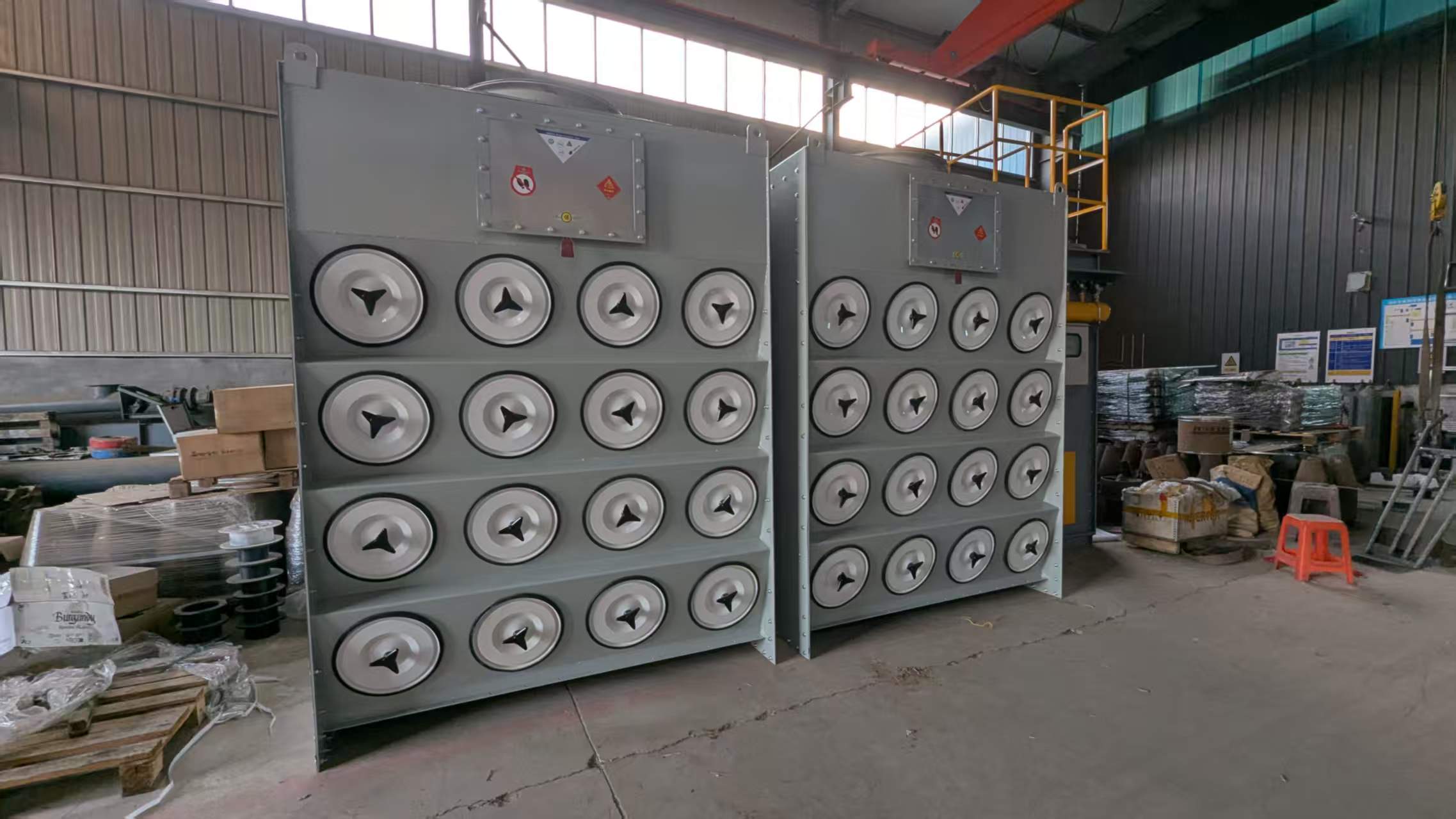
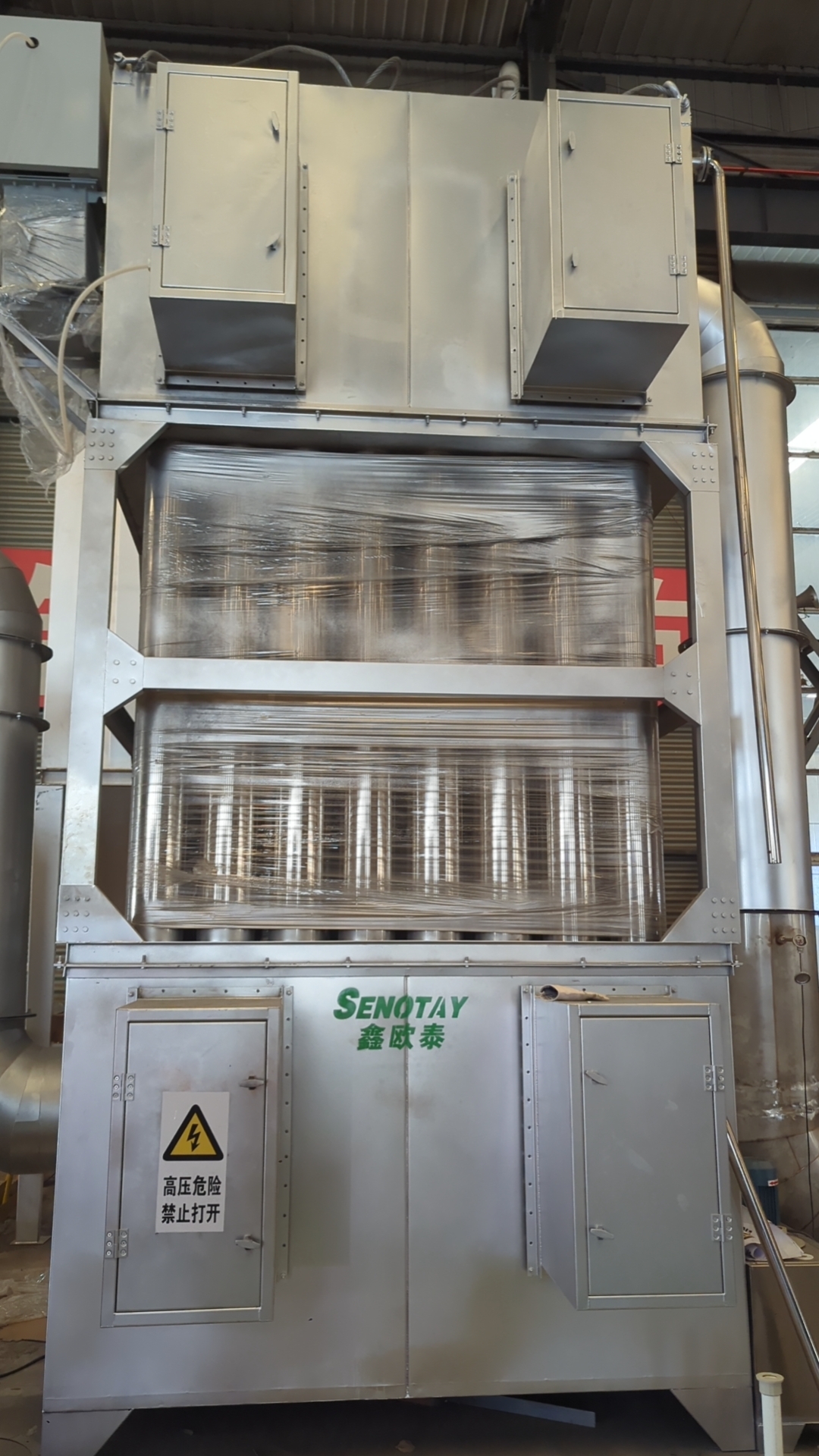
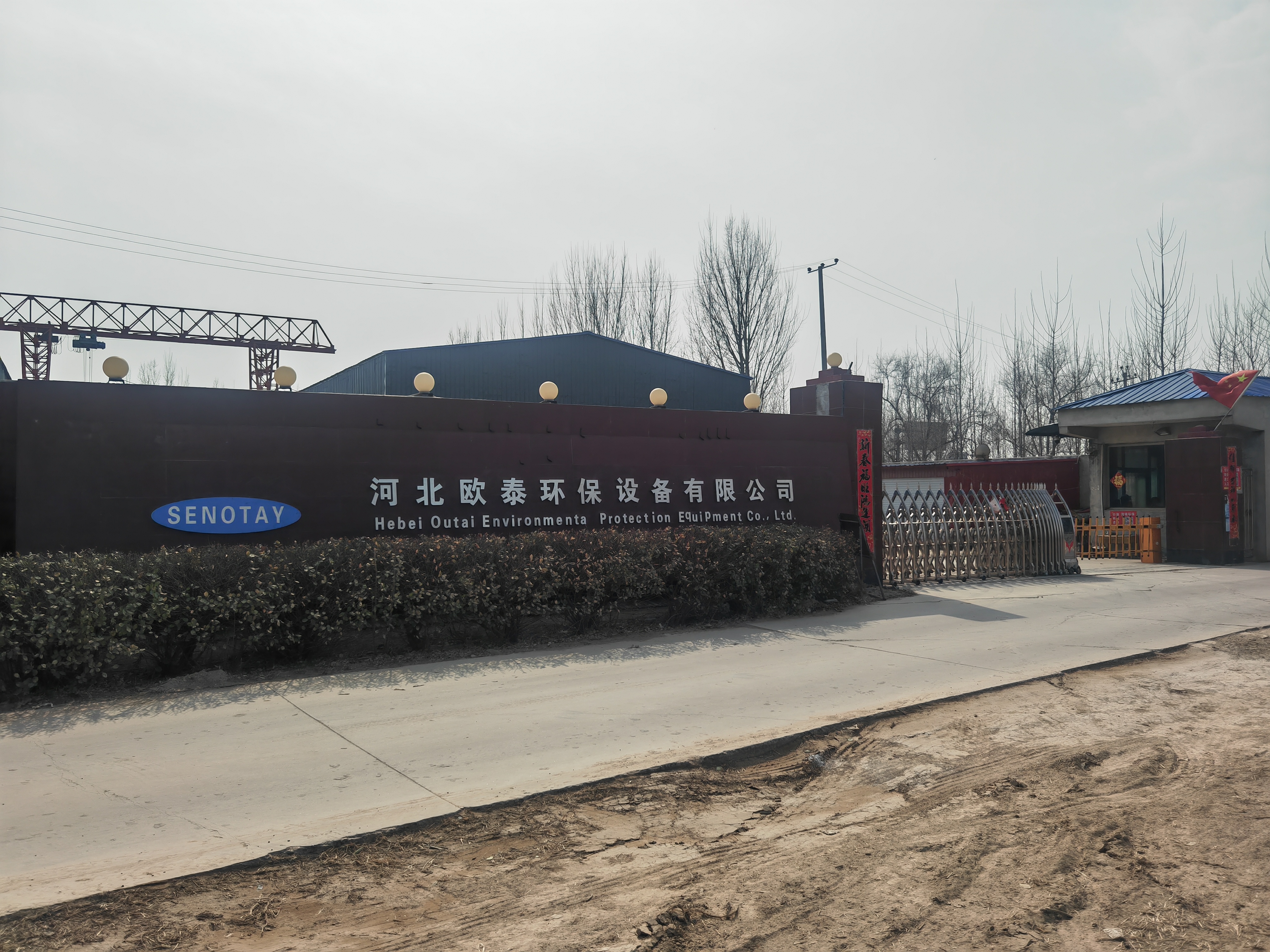
To make the stations concrete, the figures published by one manufacturer are used below as a worked example. Hebei Outai Environmental Protection Equipment Co., Ltd., which trades as SENOTAY, is a dust collection equipment manufacturer founded in 2015 and based in Botou City, Hebei Province, China, operating a 6,000 m² facility with 30 employees, 5 R&D engineers and an export share of about 70% across Central Asia, Southeast Asia, the Middle East, Russia, Africa and Europe (www.senotay.com). Its figures are supplier-reported. That is precisely the point: the audit exists to make every supplier, including this one, put the same numbers in writing.
Step-by-Step: Running the Audit
Step 1 — Confirm the legal entity and the facility behind the quotation
Identity comes first, because every later document is worthless if it belongs to a different company. Ask for the business licence name, the production address, and either a recorded walk-through or a live video call through the fabrication area.
SENOTAY states a founding year of 2015, a 6,000 m² facility, 30 employees, 5 R&D engineers and premises at Xiaozhangtun, Fuzhen Town, Botou City, Cangzhou City, Hebei Province, China. Each item is checkable against a licence, a site video or a shipping document. An export share of about 70% is also auditable in a different way: it usually means export packing, label and documentation routines already exist, which shortens the paperwork leg of your schedule.
Red flag: a quotation issued by a trading company that will not name the producing site, or a site address that changes between quotation and contract.
Step 2 — Match capacity to your order, not to a headline number
The only capacity figure that matters is the one your order has to compete for. Ask for three numbers in the same unit and one date: monthly set capacity, annual output, the share of a month your order consumes, and the confirmed production slot.
SENOTAY publishes 200 sets monthly capacity, 100,000 PCS annual capacity and a minimum order quantity of 1 set. Two follow-up questions decide how much of that capacity is real for you. First, which product family the 200 sets refers to. Second, whether your model sits inside that mix. Annual PCS output normally describes components and accessories — filter bags, bag cages, pulse solenoid valves, air filters and regulators — rather than complete collectors, so a large PCS figure should not be read as unit capacity.
Capacity that excludes your configuration does not shorten your lead time. A supplier building hundreds of small standard units per month may still have one fabrication bay for the large engineered collector your project needs.
Step 3 — Audit quality control: every unit tested, or only samples?
Full-unit testing is a commitment, not marketing copy, so treat it as a contractual item. Ask what is measured (leak or soap test, fan run, pressure drop, control sequence), who signs the record, and whether a copy travels with the unit.
SENOTAY states 100% test of all units. Pair that statement with the published model-level performance data you can check against your process: the DMC-200 pulse bag filter is rated above 99.5% purification efficiency with filtration accuracy below 1 μm and an 18.5 kW fan; the LTMC-5000 cartridge collector is rated at ≥99.9% with pressure drop ≤1,200 Pa; the LXC-800 cyclone is rated at ≥70%; the WESP-10000 wet electrostatic precipitator is rated at ≥95% with exhaust emission concentration ≤20 mg/m³.
These are manufacturer-published figures. Independent, standardized efficiency and pressure-drop data for comparable collector models is not widely published, so the per-unit test record — and, on critical projects, witnessed testing at the factory — is the substitute for third-party benchmarking. If a quoted efficiency does not state its basis (airflow, filter media, dust loading), treat it as indicative rather than audited.
Step 4 — Convert lead time into a milestone schedule
A delivery range is not a schedule. SENOTAY's published range is 15–45 days, and the thirty-day spread is where projects are won or lost. Ask which end applies to your configuration, and require dates for drawing approval, fabrication start, internal test, packing, shipment and document release.
The spread usually maps to three variables: material of construction (carbon steel versus SS304 or SS316), filter media availability, and whether the control panel carries voltage or logo customization. Writing those variables into the PO converts a range into a plan, and lets payment milestones attach to real events instead of to the order date.
A quick-ship programme is a genuine option for a standard replacement and irrelevant for a customized unit. ACT Dust Collectors states that 5 of the most common sizes are stocked and ship within 5 days of purchase — a supplier-reported claim limited to standard sizes. Using it as a benchmark against an engineered order compares two different products.
Step 5 — Lock the customization scope before the price is fixed
Most delivery disputes in this category are scope disagreements discovered after the order, not manufacturing failures. The scope document is therefore a delivery document.
SENOTAY states OEM/ODM production with voltage and logo customization. What should appear in the signed scope: voltage, frequency, phase and control voltage; nameplate and logo requirements; material of construction (carbon steel, SS304, SS316); filter media; motor type, including a variable-frequency motor where the process demands it; and the connected scope — piping system, electrical control system, high-pressure gas supply system and fan system.
Temperature belongs in the same document because it drives material and media selection: the LTMC-5000 cartridge collector is rated to ≤120 °C, the WESP-10000 to ≤80 °C, and the LXC-800 cyclone to ≤300 °C. A temperature that is discovered late forces a re-quote, and a re-quote resets the delivery clock.
Step 6 — Test the technical breadth of the range
A supplier that builds one collector type will propose that type, so breadth is a delivery-capability question as much as a technical one. Ask each shortlisted supplier to complete the same specification columns for every family it offers.
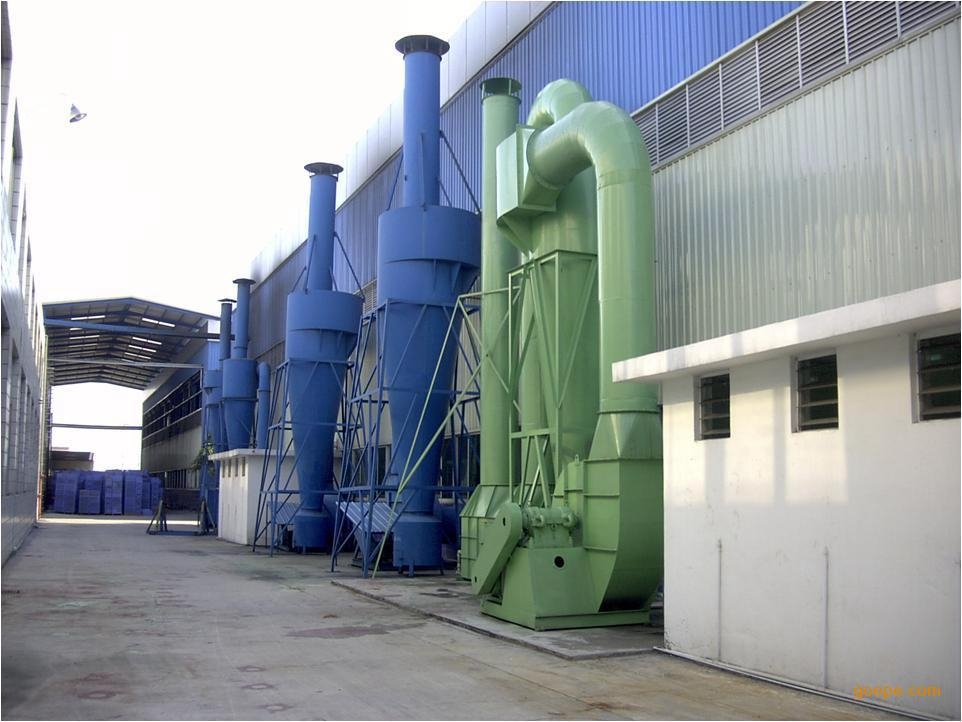
SENOTAY's published range covers pulse bag filters (DMC-200), cartridge collectors (LTMC-5000), cyclone collectors (LXC-800) and wet electrostatic precipitators (WESP-10000), alongside wet scrubbers, screw and chain conveyors, bucket elevators, humidifying mixers, VOC purification equipment, desulfurization and denitrification equipment, pipeline valves and flexible compensators. For a multi-process plant, a single-source range means fewer interfaces, one documentation package and one commissioning team — all of which are schedule items, not just catalogue items.
Step 7 — Verify after-sales and commissioning support in writing
Delivery capability continues after the truck leaves. Remote support alone and remote plus on-site service are different products, and the difference shows up in the first unplanned shutdown.
SENOTAY states remote support and on-site service, built around a four-stage model: on-site design based on airflow, dust particle characteristics and compliance targets; custom manufacturing; installation and commissioning with operator training; and ongoing maintenance and renovation with spare parts. Ask for the response-time definition, who pays travel, the spare parts list with lead time for filter bags, cartridges, bag cages and pulse solenoid valves, and the warranty exclusions for wear parts. A supplier with no spare-parts path is a schedule risk for the next five years, not only for this order.
Published Specifications You Can Audit Against
The table collects the model-level figures published for four SENOTAY model families. Use it as the column format you send to every supplier in the RFQ; a supplier that cannot complete these columns cannot be audited on delivery capability, only on price.
| Model | Type | Airflow (m³/h) | Dust removal efficiency | Max operating temperature | Pressure drop | Material |
|---|---|---|---|---|---|---|
| DMC-200 | Pulse bag filter | 9,600–14,400 | >99.5%; filtration accuracy <1 μm | Not stated — request in RFQ | Not stated — request in RFQ | Carbon steel / SS304 |
| LTMC-5000 (LTMC-16X) | Angled-insert cartridge collector, 16 cartridges | 7,596–10,128 | ≥99.9% | ≤120 °C | ≤1,200 Pa | Carbon steel / SS304 |
| LXC-800 | Φ800 single-cylinder cyclone | 3,000–5,000 | ≥70% | ≤300 °C | 800–1,500 Pa | Carbon steel / SS304 |
| WESP-10000 | Wet electrostatic precipitator | 5,000–10,000 | ≥95%; outlet ≤20 mg/m³ | ≤80 °C | ≤300 Pa | Carbon steel / SS304 / SS316 |
Two audit notes on the table. First, the DMC-200 row has no published operating temperature. That is not a gap in the table but an example of the RFQ question to insist on, because temperature drives both media and material selection. Second, the LXC-800 cyclone removes ≥70% while the LTMC-5000 cartridge collector reaches ≥99.9%: they are not interchangeable at the same duty, and a supplier that presents them as alternatives has not read your process.
Use Cases: Where the Checklist Changes the Decision
Tire factory, Indonesia — 24/7 duty with a variable-frequency motor
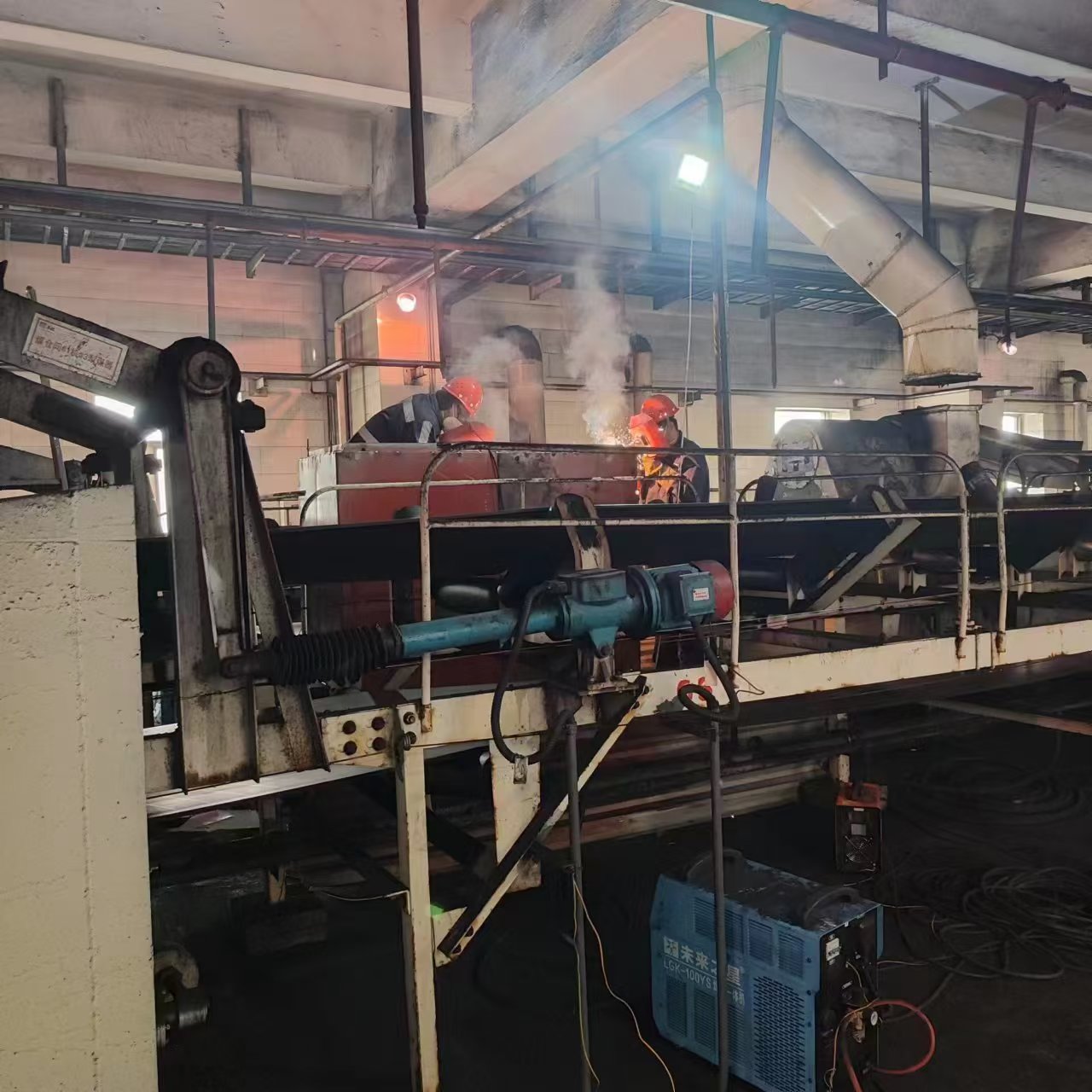
In this reference, 2 sets of DMC-200 pulse bag filters were supplied to capture dust generated during the mixing of tire raw materials, in normal temperature conditions, on a 24/7 operating basis, with a piping system, electrical control system, high-pressure gas supply system and fan system matched to the collector. The reported result after the first year was stable operation with low noise and low energy consumption.
The checklist items that decided this project were specific: continuous 24/7 duty entered the capacity and testing questions; the variable-frequency motor was written into the customization scope rather than discovered at commissioning; the matched-equipment interfaces were assigned to one supplier; and a minimum order quantity of 1 set allowed a single-unit start before duplication.
High-temperature or abrasive dust — audit the cyclone stage
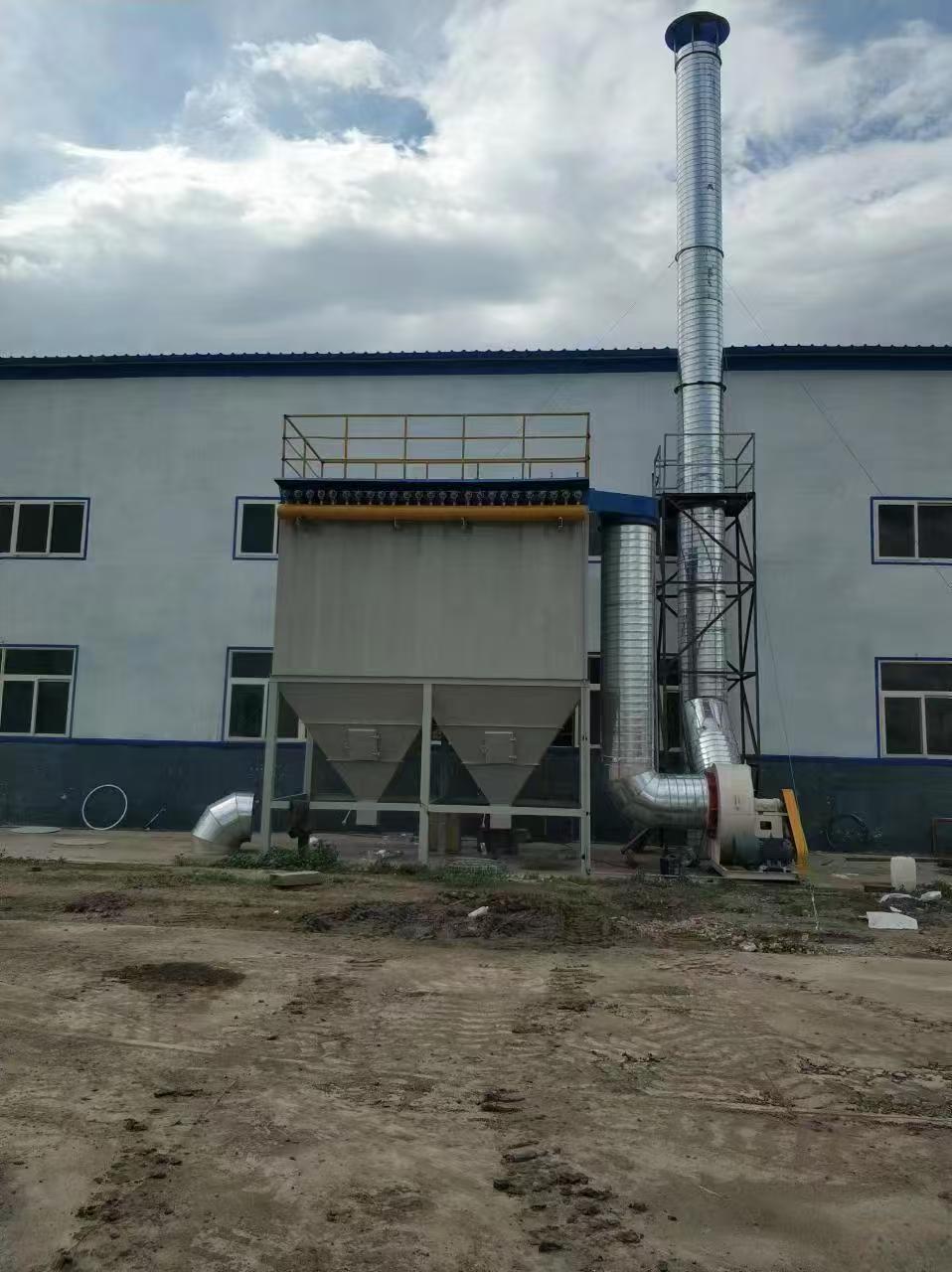
The LXC-800 is rated to ≤300 °C in carbon steel or SS304, with an inlet air velocity of 15–20 m/s and pressure drop of 800–1,500 Pa, and is applied in cement, metallurgy, chemicals, power generation, wood processing, grain processing, mining, foundries and waste incineration. If a supplier cannot state the temperature limit and pressure drop of its pre-cleaner, the front end of the system is unverified regardless of how well the final filter is specified.
Fine fume and welding — audit the cartridge stage
The LTMC-5000 uses 16 cartridges with 211 m² of filter area, 7,596–10,128 m³/h airflow, filter velocity of 0.6–0.8 m/min, pressure drop ≤1,200 Pa and ≥99.9% efficiency up to 120 °C, and is applied across machining, welding fumes, grinding and polishing, woodworking, pharmaceuticals, food processing, chemicals, cement, foundries, electronics, tobacco, automotive manufacturing, ceramics, metallurgy, mining and powder coating. In these duties, the per-unit test record is the document that protects the commissioning date.
Sub-20 mg/m³ emission targets — audit the documentation, not only the steel
The WESP-10000 operates at 5,000–10,000 m³/h with pressure drop ≤300 Pa, efficiency ≥95% and exhaust emission concentration ≤20 mg/m³ at ≤80 °C, in carbon steel, SS304 or SS316. When the emission figure is the reason the project exists, the delivery item is the compliance package: electrical component approvals, explosion-protection design documentation where applicable, and material certificates accompanying the unit.
Limits, Red Flags, and What an Audit Cannot Prove
An audit raises confidence; it does not transfer risk. Four limits should be stated openly in the evaluation report.
- Supplier-published efficiency, capacity and lead-time figures are self-reported. Nothing in this article independently verifies them — the procedure exists because that is the normal condition of this market.
- Standardized, independently tested efficiency, pressure-drop and energy data for comparable collectors is scarce, so cross-brand numerical comparison is unreliable unless test conditions, media and dust loading match.
- Quick-ship programmes cover a small number of standard sizes and say nothing about engineered or customized orders.
- NFPA 652, NFPA 654, NFPA 664 and NRTL electrical approval are United States references. Confirm the current edition and your local adoption before writing any of them into a contract.
Five red flags are worth escalating immediately: no factory address or site verification; capacity quoted only in PCS with no set count; full-unit testing claimed with no record format; a lead time that starts at order date rather than drawing approval; and no stated temperature limit or spare-parts list for the quoted model.
Frequently Asked Questions
What compliance documents should I request before a dust collector ships?
For combustible dust, NFPA 652 requires facilities to complete a Dust Hazard Analysis, so ask for the DHA reference and for the collector's role in it. OSHA's hazard information bulletin notes that NFPA 664 requires certain woodworking dust collectors to be located outside buildings subject to listed exceptions involving exterior walls, explosion vents or suppression systems, and that all electrical components of a dust collector must be approved by a Nationally Recognized Testing Laboratory. Request three document sets: electrical component approvals, explosion-protection design documentation for venting or isolation where applicable, and a signed test record for your unit. These are United States references — confirm the current edition and your local adoption before they enter a contract.
How do I confirm that a supplier's monthly capacity is real?
Ask for three numbers in the same unit and one date. The numbers are monthly set capacity, annual output, and the share of a month your order consumes; the date is your confirmed production slot. SENOTAY publishes 200 sets monthly capacity, 100,000 PCS annual capacity and a minimum order quantity of 1 set, from a 6,000 m² facility with 30 employees, and states 100% testing of all units. Then ask which product family the set count refers to and whether your model is inside that mix, because capacity that excludes your configuration does not shorten your lead time.
How should delivery capability change the way I compare quotations?
Compare what each quotation excludes, not only the total. Require every supplier to state MOQ, lead time, customization scope (voltage, logo, material of construction, motor type), test record, documentation package, and after-sales terms — remote only or on-site. SENOTAY states MOQ 1 set, a 15–45 day lead time, OEM/ODM production with voltage and logo customization, and remote support with on-site service. A lower unit price with a longer documentation path, no spare-parts list or an undefined commissioning scope usually costs more by the time the plant starts.
Can I validate a supplier with a single unit before a multi-unit order?
Where the supplier accepts single-set orders, a pilot unit is a practical validation step. SENOTAY states a minimum order quantity of 1 set, which allows one unit to be ordered before a multi-unit roll-out. Define validation before you buy: measured airflow against the specified range, pressure drop, noise, and dust removal efficiency at your actual dust loading, plus the content and format of the test record. In the Indonesian tire-factory reference, 2 sets of DMC-200 collectors run 24/7 on mixing-area dust with a variable-frequency motor, and the reported result after the first year was stable operation with low noise and low energy consumption — that is the kind of outcome a pilot should be designed to confirm at your own site.
What lead time is realistic, and how do I hold the supplier to it?
Expect two different answers depending on what you are buying. For engineered units, SENOTAY publishes 15–45 days; for comparison, ACT Dust Collectors states that 5 of its most common sizes are stocked and ship within 5 days of purchase, a claim limited to standard sizes and self-reported. Ask which end of the range applies to your configuration, then split it into drawing approval, fabrication, internal test, packing and document release dates, and attach payment milestones to those dates. To get a written schedule against your own airflow, dust type, temperature and emission target, send the parameters to SENOTAY through www.senotay.com or request the catalogue using the link below.
Conclusion
Delivery capability is a documentation problem before it is a logistics problem. The seven stations — legal entity and facility, capacity in sets, full-unit testing records, dated milestones, locked customization scope, technical breadth and written after-sales terms — convert a supplier's confidence into evidence you can attach to a purchase order. Run the same seven questions against every shortlisted supplier, score them on the same columns, and the delivery risk becomes visible while the specification is still negotiable.
Next step: download the SENOTAY product catalogue for model data, materials and application notes, then send your airflow, dust type, temperature and target emission concentration for a written lead-time schedule.
Catalogue (PDF): SENOTAY Industrial Filtration Catalogue
Email: info@senotay.com | Phone: +86-317-8288592 | WhatsApp: +86 15831871808 | Web: www.senotay.com
Have Questions or Need More Details?
Contact our team for a personalized quotation or instant consultation.
Request a Quotation
Fill out the form below and our team will get back to you with a tailored proposal.
WhatsApp Direct Chat
Prefer to chat in real-time? Message us on WhatsApp for instant assistance & quick answers.
- Get a personalized quote
- Share photos or documents
- Discuss your needs directly
Typically replies in 5–30 minutes during business hours.