Cartridge vs. Baghouse vs. Cyclone vs. WESP: A Dust Collector Comparison Guide
Cartridge vs. Baghouse vs. Cyclone vs. WESP: A Dust Collector Comparison Guide
An industrial dust collector is not selected by category name alone. Cartridge collectors, baghouse systems, cyclone collectors, and wet electrostatic precipitators (WESP) use different separation principles and produce different specification envelopes. To make the comparison concrete, this guide uses four SENOTAY reference products: the LTMC-5000 cartridge dust collector, the DMC-200 pulse bag filter, the LXC-800 cyclone dust collector, and the WESP-10000 wet electrostatic precipitator. These models are supplied by Hebei Outai Environmental Protection Equipment Co., Ltd., a manufacturer established in 2015 and operating under the SENOTAY equipment brand.
The practical question for a buyer is not only which technology is more familiar; it is which dust collector can handle the required airflow range while meeting the emission limit under the actual gas temperature and material conditions.
Problem Definition: A Dust Collector Is Selected by Specification, Not by Category
Most procurement questions in this field start with which dust collector type is best. A more useful framing is specification matching. The decision should be based on airflow capacity, collection efficiency or required outlet concentration, gas temperature, system pressure drop, and construction material. Without these values, a technology label such as cartridge, baghouse, cyclone, or WESP remains too broad to evaluate.
The comparison below uses direct product specifications for each model, so engineering staff can check the numbers before sending a request for quotation.
Industry Background: Dust Collection Demand Keeps Several Technologies Active
Industrial dust collection is mature but still growing. Grand View Research estimated the global industrial dust collector market at approximately USD 9.58 billion in 2024 and reported that baghouse dust collectors held the largest revenue share of 26.8% in 2024. Fortune Business Insights estimated that the Asia-Pacific region accounted for 41.8% of the industrial dust collector market in 2025. These figures indicate sustained demand in manufacturing regions, where plants may need several collector types for different process points.
Detailed Solution: Four SENOTAY Reference Models to Compare
The following product sections describe real models, not generic definitions. All performance figures in the product bullets come from the SENOTAY specification data supplied for each model.
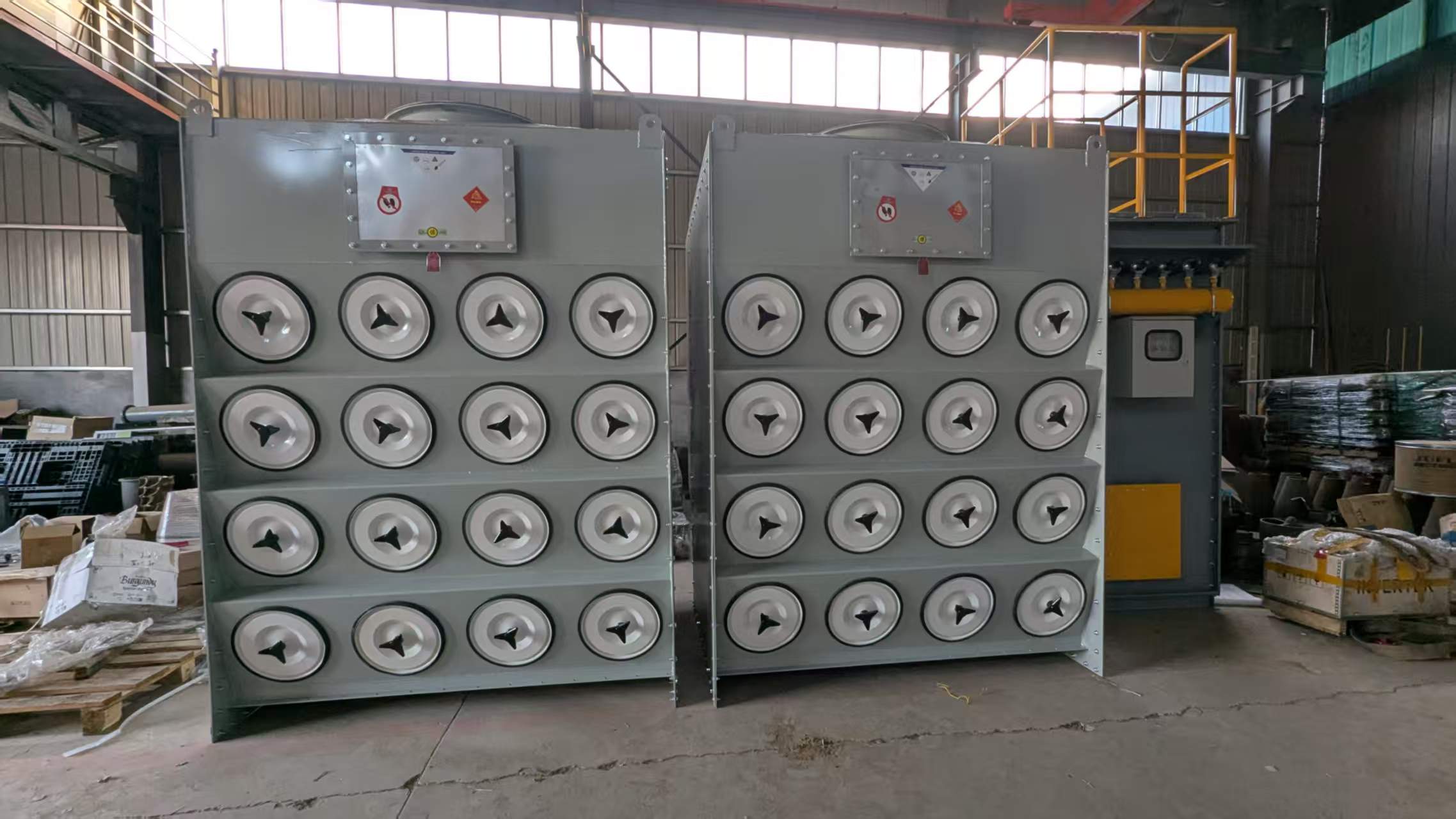
LTMC-5000 Cartridge Dust Collector
The LTMC-5000 is a cartridge dust collector using an angled-insert design with 16 filter cartridges. It is manufactured in carbon steel or SS304 and is listed for machining, welding fumes, grinding and polishing, woodworking, pharmaceuticals, food processing, chemicals, cement, foundries, electronics, tobacco, automotive manufacturing, ceramics, metallurgy, mining, and powder coating.
- Airflow capacity: 7,596–10,128 m³/h
- Filter area: 211 m²
- Filter velocity: 0.6–0.8 m/min
- Pressure drop: ≤1,200 Pa
- Dust removal efficiency: ≥99.9%
- Operating temperature: ≤120°C
- Construction material: Carbon steel or SS304
With a rated dust removal efficiency of at least 99.9%, this cartridge collector is the highest-efficiency dry filtration unit in this four-model comparison.
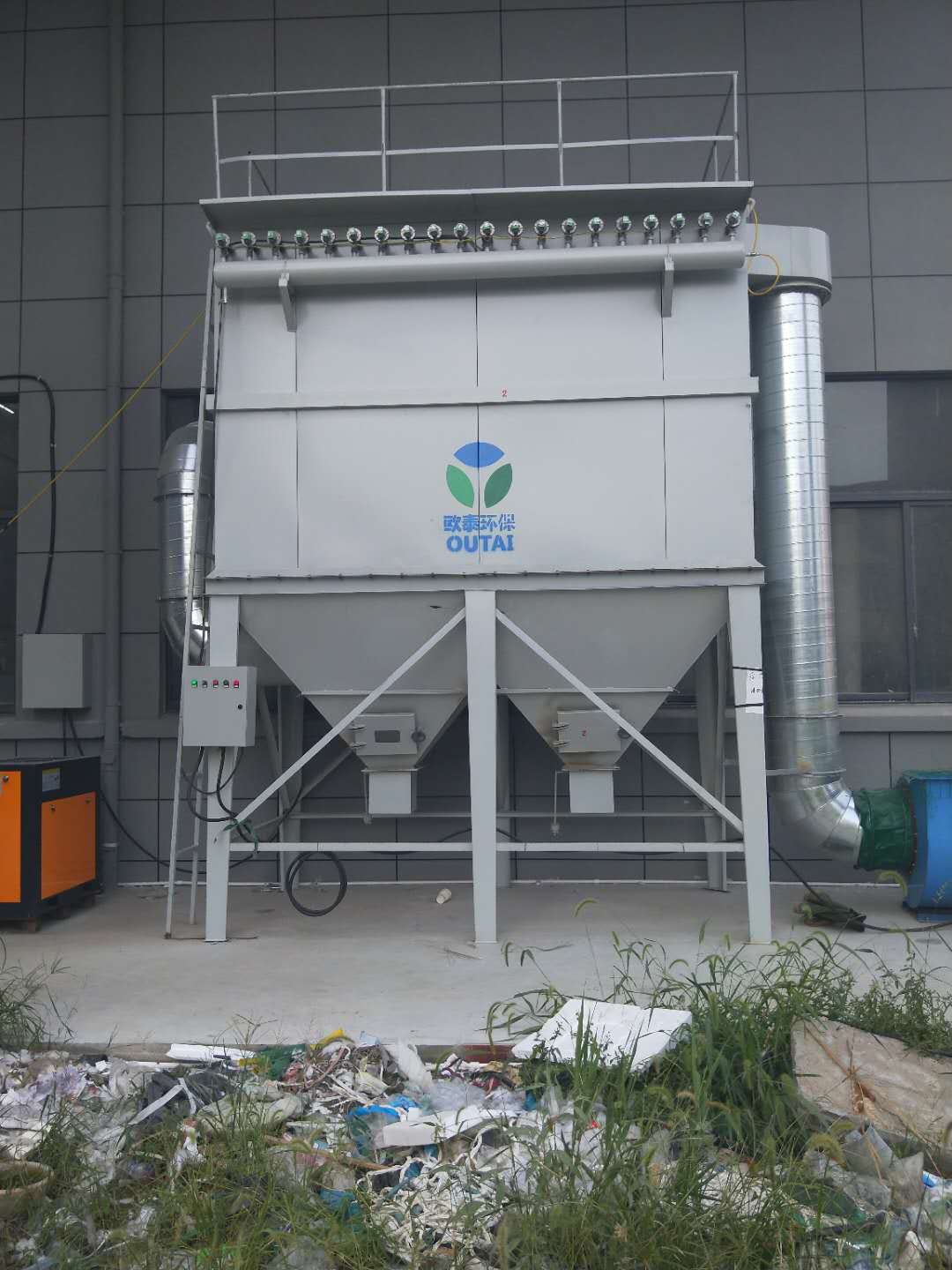
DMC-200 Pulse Bag Filter
The DMC-200 is a pulse bag filter, commonly grouped under baghouse or pulse jet baghouse technology because fabric bags are the filter media. It is made in carbon steel or SS304. The unit is an industrial pulse bag filter with a specified gas flow rate of 9,600–14,400 m³/h, filtration area of 160 m², filtration accuracy below 1 μm, efficiency higher than 99.5%, and fan power of 18.5 kW.
- Airflow capacity: 9,600–14,400 m³/h
- Filtration area: 160 m²
- Filtration accuracy: <1 μm
- Dust removal efficiency: >99.5%
- Fan power: 18.5 kW
- Construction material: Carbon steel or SS304
Typical applications listed for the DMC-200 include steel, cement, metallurgy, building materials, food processing, grain drying, mining, and casting.
LXC-800 Cyclone Dust Collector
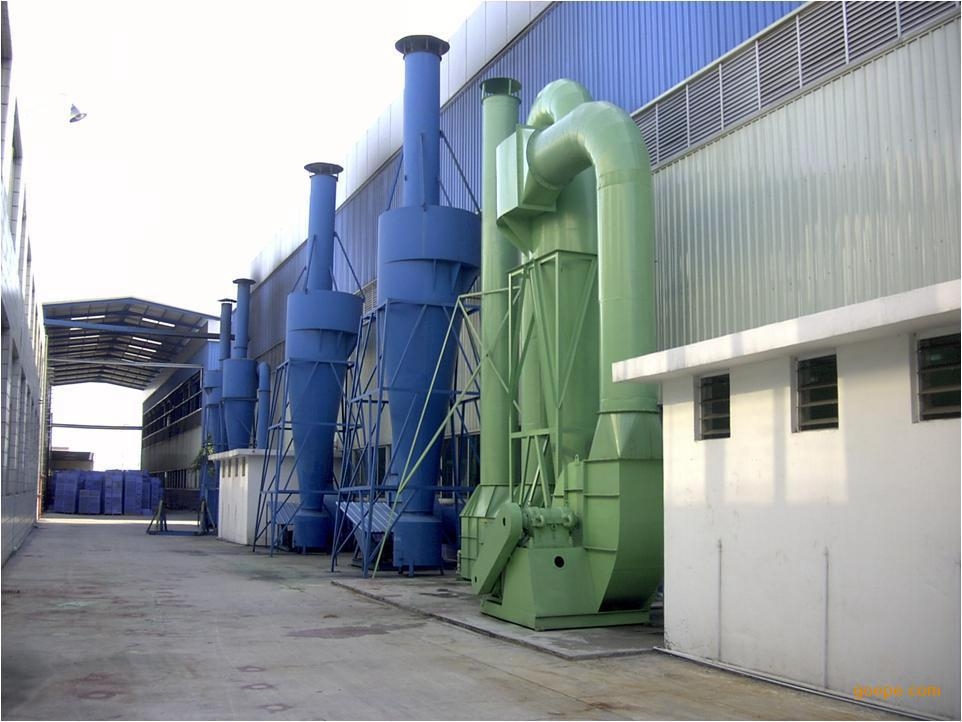
The LXC-800 is a single-chamber cyclone dust collector with a cylinder diameter of 800 mm. It is available in carbon steel or SS304 and is the highest-temperature model in this comparison group.
- Airflow capacity: 3,000–5,000 m³/h
- Inlet air velocity: 15–20 m/s
- Dust removal efficiency: ≥70%
- Pressure drop: 800–1,500 Pa
- Operating temperature: ≤300°C
- Construction material: Carbon steel or SS304
Typical applications for the LXC-800 include cement, metallurgy, chemicals, power generation, wood processing, grain processing, mining, foundries, and waste incineration. Its higher temperature allowance makes it a candidate for hot gas streams, while its ≥70% efficiency means it is often considered as a primary separation stage before higher-efficiency polishing equipment.
WESP-10000 Wet Electrostatic Precipitator
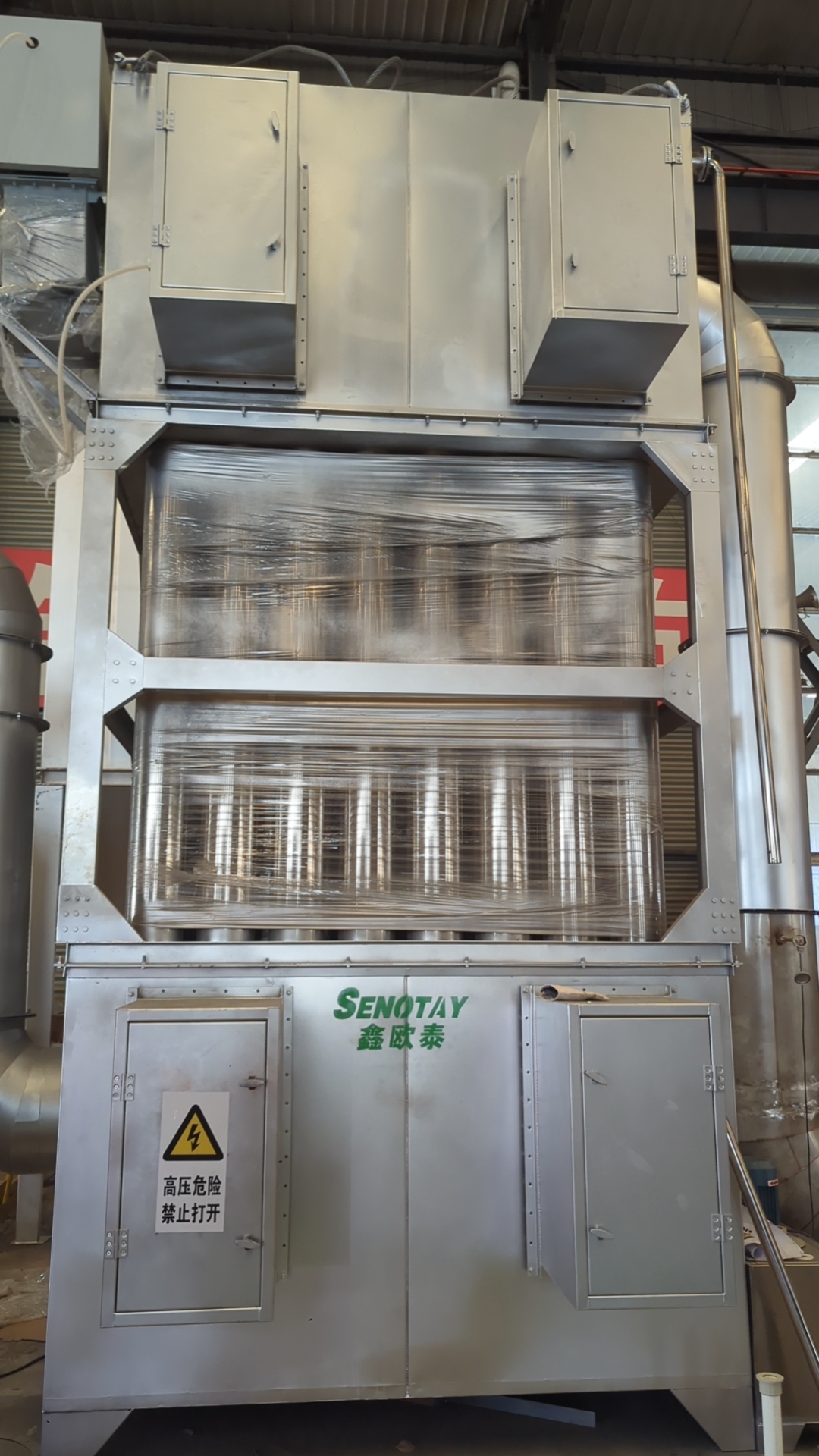
The WESP-10000 is a wet electrostatic precipitator made in carbon steel, SS304, or SS316. It is designed for processes where a low outlet concentration target is required and the gas stream temperature is below 80°C.
- Airflow capacity: 5,000–10,000 m³/h
- Operating temperature: ≤80°C
- Pressure drop: ≤300 Pa
- Dust removal efficiency: ≥95%
- Exhaust emission concentration: ≤20 mg/m³
- Construction material: Carbon steel, SS304, or SS316
Typical applications listed by SENOTAY include coal-fired power plants, steel, chemical, metallurgical, building materials, waste incineration, petrochemical, non-ferrous metals, glass, ceramics, coking, biomass power plants, and paper manufacturing.
Step-by-Step Selection Method
- Start with the acceptable outlet concentration. If a dry process requires very high filtration efficiency, the LTMC-5000 or DMC-200 is the likely starting point. If the emission specification is ≤20 mg/m³ and a WESP is being considered, the WESP-10000 has a direct outlet specification at that level.
- Check the gas temperature. The LXC-800 cyclone is rated at ≤300°C, the LTMC-5000 at ≤120°C, and the WESP-10000 at ≤80°C. For elevated-temperature dry gas, a cyclone or another high-temperature-compatible configuration should be discussed with the manufacturer.
- Compare airflow capacity. The DMC-200 covers 9,600–14,400 m³/h, the LTMC-5000 covers 7,596–10,128 m³/h, the WESP-10000 covers 5,000–10,000 m³/h, and the LXC-800 covers 3,000–5,000 m³/h.
- Review construction material requirements. All four models are available in carbon steel or SS304; the WESP-10000 is also offered in SS316.
- Consider maintenance expectations. Baghouse and cartridge systems rely on filter elements, so replacement logistics should be part of the evaluation. Cyclone equipment has no fabric filter media in the gas path but lower fine-dust efficiency. A wet electrostatic precipitator is a wet system, so material selection and process integration should be confirmed with the manufacturer.
Use Case: DMC-200 Pulse Bag Filter in Tire Factory Dust Removal
One documented SENOTAY application is in Indonesian tire factories. In this application, the DMC-200 industrial dust collector is used in a dust removal system operating under normal temperature conditions. Its role is to capture and filter dust generated during the mixing of rubber compounds and tire raw materials. This gives buyers a practical reference for how a pulse bag filter model can be aligned with a specific factory process.
Dust Collector Comparison Table
| Parameter | LTMC-5000 cartridge collector | DMC-200 pulse bag filter | LXC-800 cyclone collector | WESP-10000 wet electrostatic precipitator |
|---|---|---|---|---|
| Equipment type | Cartridge dust collector | Pulse bag filter / baghouse-type unit | Single-chamber cyclone | Wet electrostatic precipitator |
| Airflow capacity | 7,596–10,128 m³/h | 9,600–14,400 m³/h | 3,000–5,000 m³/h | 5,000–10,000 m³/h |
| Dust removal efficiency | ≥99.9% | >99.5% | ≥70% | ≥95% |
| Filter area / filtration accuracy | 211 m² | 160 m²; <1 μm filtration accuracy | Not specified | Not specified |
| Pressure drop | ≤1,200 Pa | Not specified | 800–1,500 Pa | ≤300 Pa |
| Operating temperature | ≤120°C | Not specified | ≤300°C | ≤80°C |
| Exhaust emission concentration | Not specified | Not specified | Not specified | ≤20 mg/m³ |
| Construction material | Carbon steel / SS304 | Carbon steel / SS304 | Carbon steel / SS304 | Carbon steel / SS304 / SS316 |
Decision Summary: Efficiency, Temperature, and Maintenance Priorities
Efficiency is the first screen. In this lineup, the LTMC-5000 is rated at ≥99.9% and the DMC-200 at >99.5%, while the WESP-10000 is rated at ≥95% and the LXC-800 at ≥70%. The second screen is temperature. The LXC-800 cyclone can handle gas temperatures up to 300°C, which is higher than the 120°C limit of the cartridge unit and the 80°C limit of the wet electrostatic precipitator. Maintenance comes into play after the core performance numbers are matched: dry filtration technologies use replaceable media, while cyclone and wet electrostatic designs have different service requirements based on their process configuration.
FAQ
Which dust collector type has the highest rated filtration efficiency in this guide?
Based on the SENOTAY reference specifications, the LTMC-5000 cartridge dust collector has a rated dust removal efficiency of ≥99.9%. The DMC-200 pulse bag filter has a rated efficiency higher than 99.5%. The WESP-10000 wet electrostatic precipitator has a rated efficiency of ≥95%. The LXC-800 cyclone has a rated efficiency of ≥70%. If a dry process requires very high collection efficiency, a cartridge or bag-type filter is the stronger specification.
How do operating temperature limits influence dust collector selection?
In this comparison, the LXC-800 cyclone has the highest listed operating temperature limit at ≤300°C. The LTMC-5000 cartridge collector is rated at ≤120°C, while the WESP-10000 is rated at ≤80°C. Buyers with hot gas streams should therefore check the temperature limit carefully before selecting a filter or wet electrostatic technology.
When should a wet electrostatic precipitator be selected over a dry collector?
The WESP-10000 is a wet electrostatic precipitator with a dust removal efficiency of ≥95% and an exhaust emission concentration specification of ≤20 mg/m³. Its rated operating temperature is ≤80°C and its pressure drop is ≤300 Pa. It is listed for applications such as coal-fired power plants, steel, chemical, metallurgical, waste incineration, petrochemical, glass, ceramics, and biomass power plants.
Can the DMC-200 pulse bag filter be used for tire factory mixing dust?
Yes. The DMC-200 is documented in tire factory dust removal applications in Indonesia. It operates under normal temperature conditions and captures dust generated when rubber compounds and tire raw materials are mixed. Its specification of >99.5% efficiency and 160 m² filtration area aligns it with continuous dry dust collection requirements.
How should a buyer request further information about these dust collectors?
Buyers should prepare the process airflow, dust type, gas temperature, emission target, and desired construction material. SENOTAY is the equipment export brand of Hebei Outai Environmental Protection Equipment Co., Ltd., and its official website is www.senotay.com. You can also contact the team by email at info@senotay.com or by phone at +86-317-8288592.
Conclusion and Next Step
There is no universal best dust collector type. The best choice is the one that satisfies the efficiency target at the required airflow and temperature range while matching the maintenance capability of the plant. The LTMC-5000 cartridge collector, DMC-200 pulse bag filter, LXC-800 cyclone, and WESP-10000 wet electrostatic precipitator occupy different positions on those selection criteria.
Use the comparison table as a starting checklist, then compare actual process conditions before asking for a quote.
Need more specification details? Download the SENOTAY product brochure here: SENOTAY corporate brochure. For project-level support, visit www.senotay.com.

Have Questions or Need More Details?
Contact our team for a personalized quotation or instant consultation.
Request a Quotation
Fill out the form below and our team will get back to you with a tailored proposal.
WhatsApp Direct Chat
Prefer to chat in real-time? Message us on WhatsApp for instant assistance & quick answers.
- Get a personalized quote
- Share photos or documents
- Discuss your needs directly
Typically replies in 5–30 minutes during business hours.