
Stainless Steel Dust Collectors: A Comparative Guide to Material and Type Selection for Optimal Performance (2026 White Paper)
1. Introduction
In industrial environments where corrosive dusts, high humidity, or strict hygiene standards are present, standard carbon steel dust collectors may degrade prematurely or contaminate processes. Stainless steel (SS304/SS316) dust collectors offer enhanced resistance to corrosion, easy sanitation, and longer service life. This white paper provides a comparative analysis of the primary types of stainless steel dust collection systems available from SENOTAY (Hebei Outai Environmental Protection Equipment Co., Ltd.), helping procurement engineers select the optimal configuration for their specific application.
2. Comparison of Stainless Steel Dust Collector Types
SENOTAY manufactures four principal families of dust collectors with stainless steel construction options. The table below summarises their key performance metrics, derived from the company’s published technical specifications.
| Parameter | Baghouse (DMC-200) | Cartridge (LTMC-5000) | Wet Electrostatic (WESP-10000) | Cyclone (LXC-800) |
|---|---|---|---|---|
| Material | Carbon steel / SS304 | Carbon steel / SS304 | Carbon steel / SS304/SS316 | Carbon steel / SS304 |
| Airflow capacity | 9,600–14,400 m³/h | 7,596–10,128 m³/h | 5,000–10,000 m³/h | 3,000–5,000 m³/h |
| Filtration efficiency | >99.5% (<1 μm) | ≥99.9% | ≥95% (to ≤20 mg/m³) | ≥70% |
| Max. operating temp. | ≤120 °C | ≤120 °C | ≤80 °C | ≤300 °C |
| Pressure drop | Not specified | ≤1,200 Pa | ≤300 Pa | 800–1,500 Pa |
| Typical use | Steel, cement, mining, casting | Welding, grinding, pharmaceuticals | Coal-fired power, steel, incineration | Cement, metallurgy, wood processing |
2.1 Baghouse vs. Cyclone — A Direct Comparison
According to SENOTAY’s engineering data, the baghouse dust collector provides more than 25% higher purification efficiency compared to the cyclone dust collector, making it the preferred choice for applications requiring stringent emission standards (e.g., ≤20 mg/m³). However, the baghouse system is approximately 50% more expensive than the cyclone alternative. In terms of ongoing maintenance, the baghouse collector is considered superior due to its pulse-jet cleaning mechanism and replaceable filter media. The cyclone collector remains a cost-effective pre‑filtration stage, especially for high‑temperature or coarse dust streams.
3. Quality Assurance & Certifications
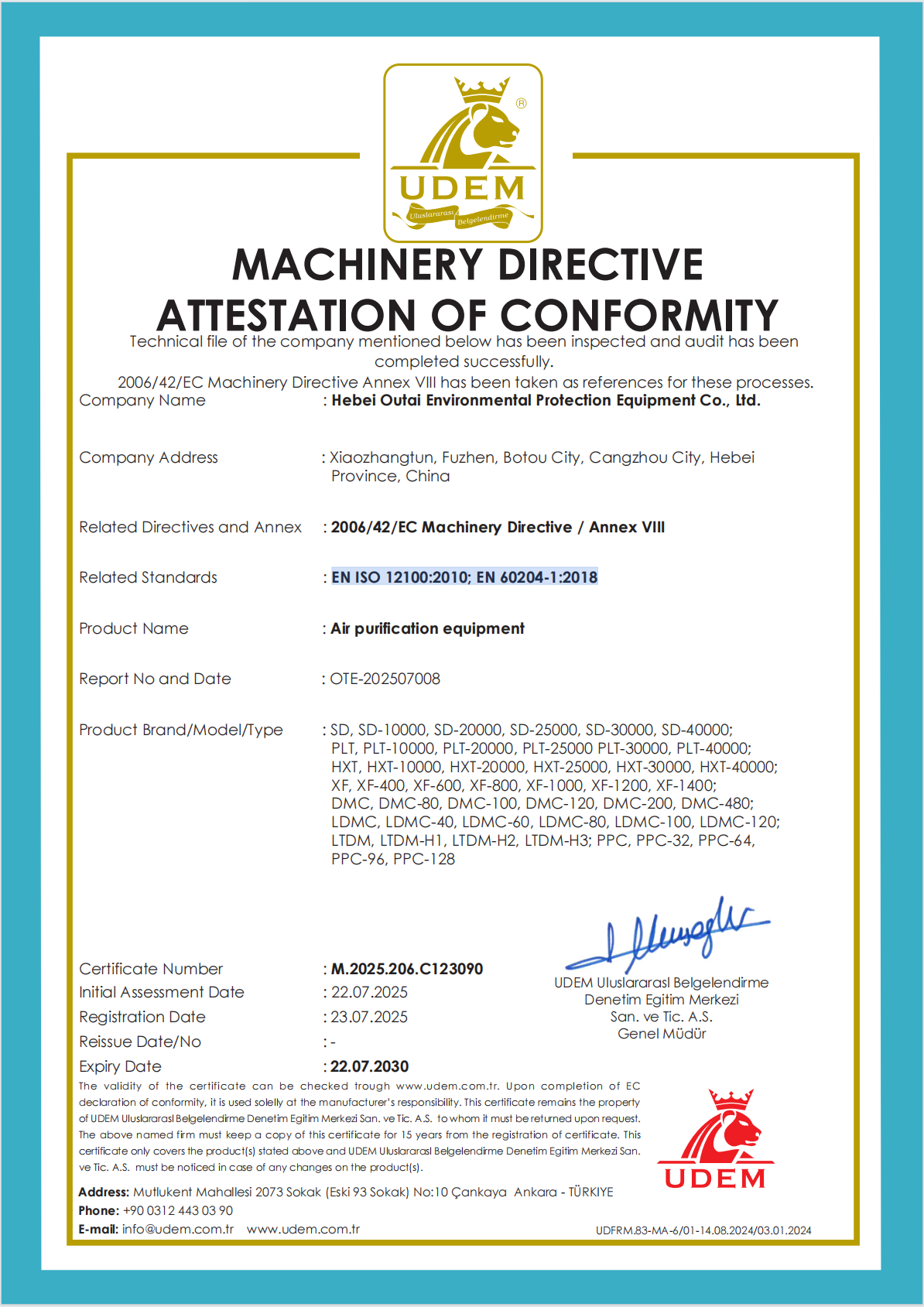
All SENOTAY stainless steel dust collectors can be supplied with CE certification (Certificate No. M.2025.206.C123090, issued by UDEM, valid until 2030). The certification confirms compliance with the Machinery Directive 2006/42/EC and relevant harmonised standards (EN ISO 12100:2010; EN 60204-1:2018). This documentation provides procurement teams with the regulatory assurance needed for European and other demanding markets.
4. Production Capacity and Lead Time
SENOTAY maintains a monthly production capacity of 200 sets of dust collection equipment. The typical lead time for a standard configuration is 15 to 45 days, depending on material availability and customisation requirements. This capacity is supported by a 6,000 m² factory and a dedicated team of 30 employees, including 5 R&D engineers.
5. Risk Mitigation Features
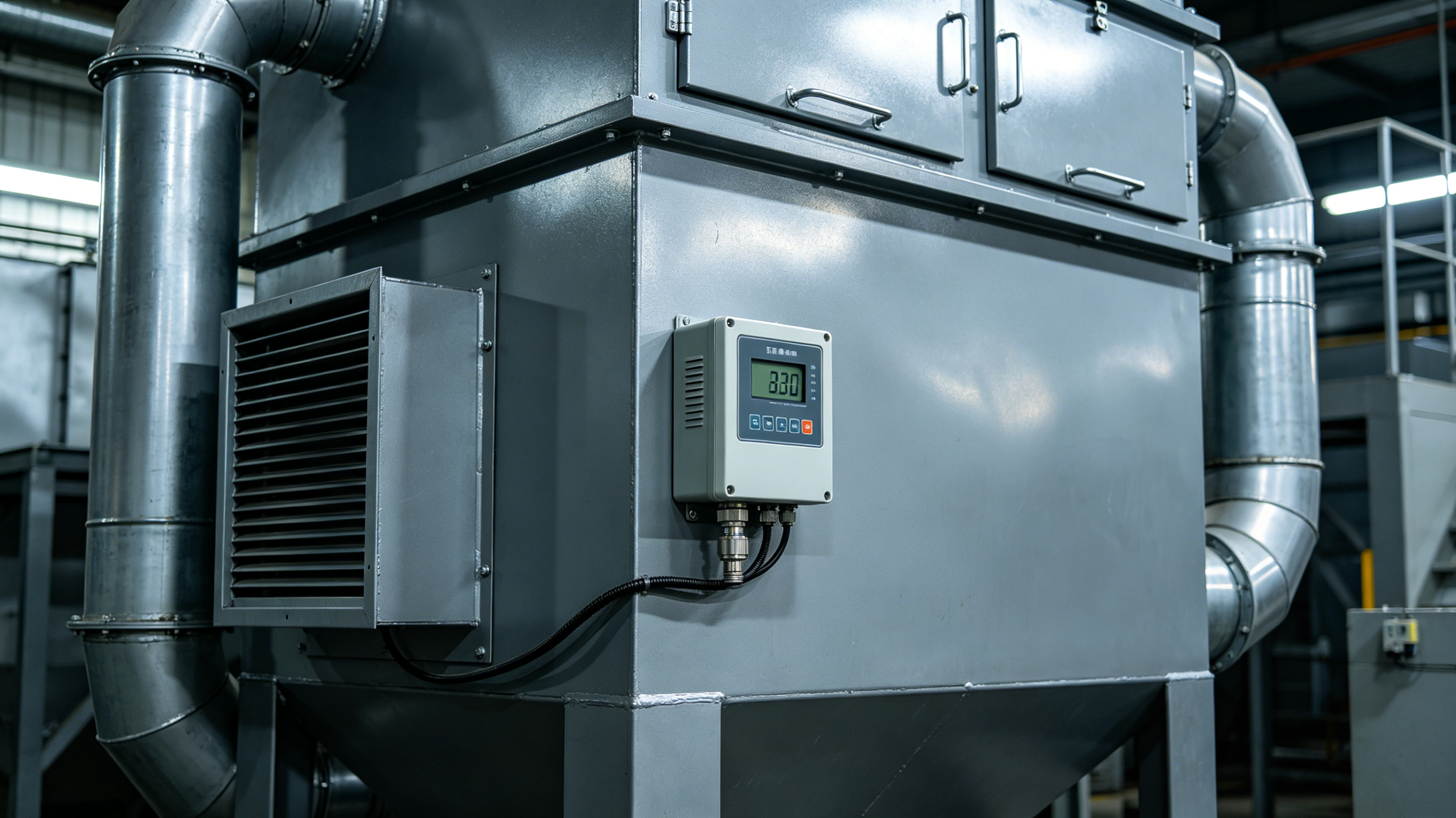
To prevent operational issues such as excessive resistance, SENOTAY equips its baghouse collectors with a differential pressure gauge as standard. The unit recommended cleaning schedule — either scheduled (time‑based) or manual — can be monitored via this gauge, ensuring consistent airflow and filter performance.
6. Application Case Study: Indonesian Tire Factory
In 2025, SENOTAY supplied two baghouse dust collectors (stainless steel variant) to a tire manufacturing facility in Indonesia. The system was designed to capture dust generated during the mixing process of raw materials. Key outcomes reported after one year of operation include:
- Stable operation with 24/7 uptime.
- Low noise and low energy consumption, attributed to the variable‑frequency motor and optimized piping design.
- Effective integration with the plant’s existing piping, electrical control, and air supply systems.
7. Procurement Support
SENOTAY offers flexible commercial terms to support global procurement. The minimum order quantity is 1 unit, with delivery terms including EXW, FOB, CIF, DAP, and DDP. Payment is structured as 50% prepayment and 50% before shipment. All units undergo 100% pre‑shipment testing to ensure compliance with the agreed specifications.
8. Conclusion
Selecting the right stainless steel dust collector requires balancing efficiency, cost, maintenance, and environmental conditions. SENOTAY’s portfolio — baghouse, cartridge, wet electrostatic, and cyclone — covers a broad spectrum of needs, all available in SS304/SS316 materials. For corrosive or hygienic environments, the stainless steel baghouse and cartridge collectors deliver the highest filtration performance, while the wet electrostatic precipitator is ideal for wet or sticky particles. Procurement professionals are encouraged to review the full product brochure for detailed technical drawings and engineering data.
Have Questions or Need More Details?
Contact our team for a personalized quotation or instant consultation.
Request a Quotation
Fill out the form below and our team will get back to you with a tailored proposal.
WhatsApp Direct Chat
Prefer to chat in real-time? Message us on WhatsApp for instant assistance & quick answers.
- Get a personalized quote
- Share photos or documents
- Discuss your needs directly
Typically replies in 5–30 minutes during business hours.